Temple Weir
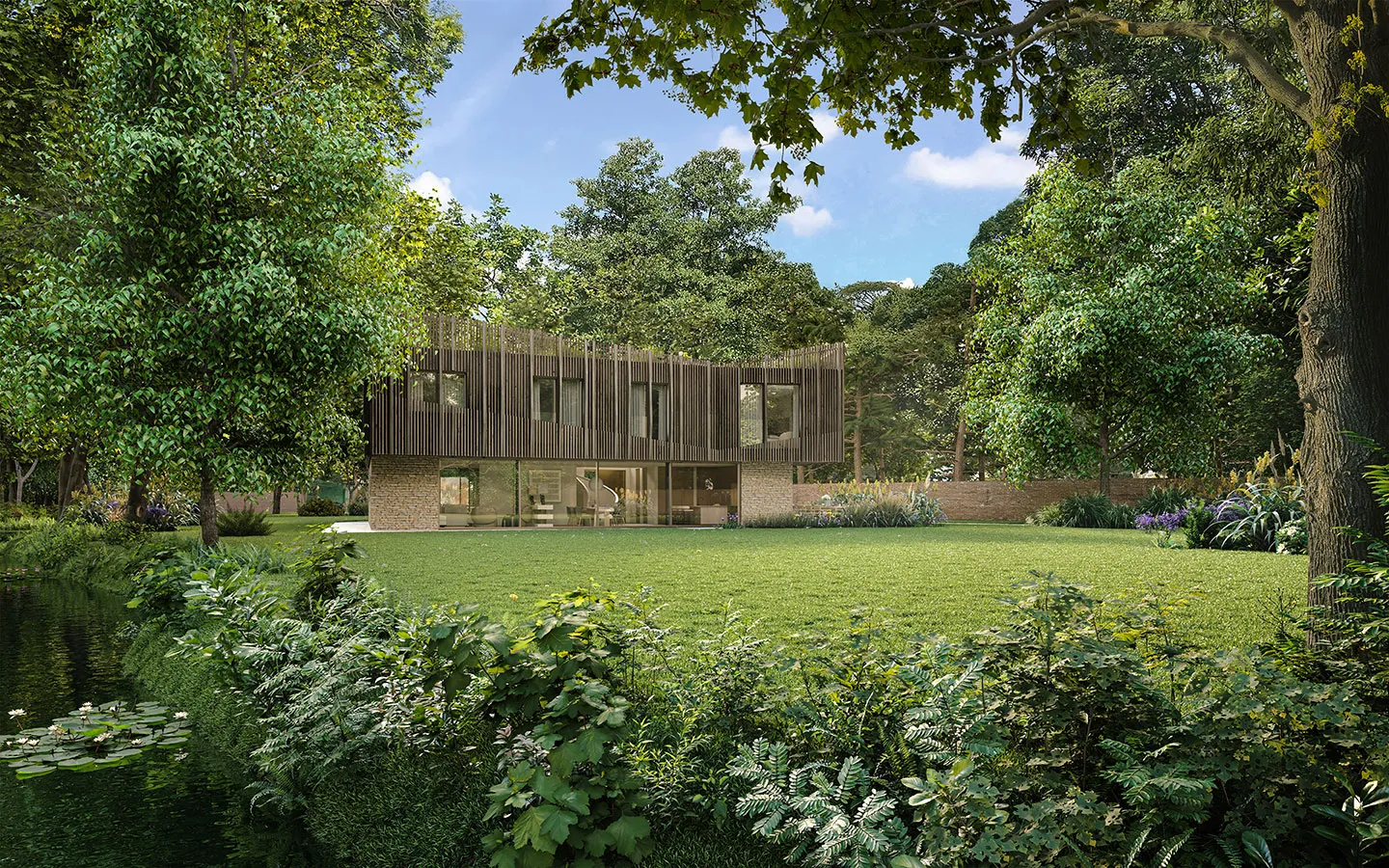
Temple Weir is a private net-zero replacement dwelling set within a protected riverside location in Bisham. After a long and complex planning history for the site, Spratley & Partners were appointed to take a fresh look and guide the project through the planning process.
Starting with a clear, strategy-led approach, the practice carefully considered local planning policy, environmental constraints and the character of the surrounding landscape. Working closely with the homeowner, the team developed a well-evidenced proposal that responds sensitively to its riverside setting while meeting the highest standards of sustainability.
The result is a thoughtfully designed family home that achieves net-zero operational carbon, demonstrating how careful preparation, strong design and a robust planning strategy can unlock challenging sites and create comfortable, low-energy homes built for the future.
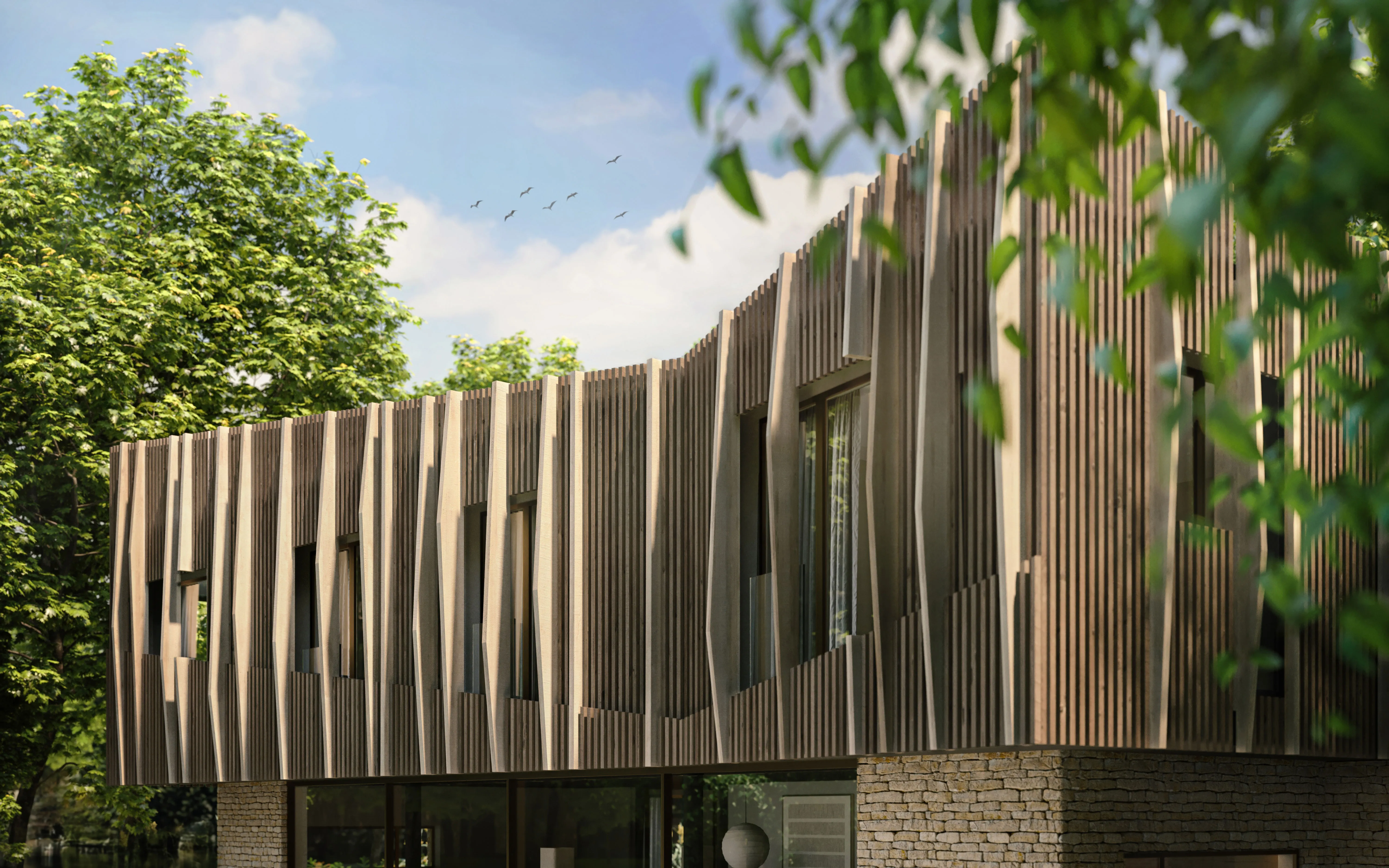
The architectural design draws inspiration from the surrounding woodland, creating a bespoke family home that sits comfortably within its landscape. A focus on craftsmanship, honest construction and a restrained palette of natural materials gives the house a calm, enduring quality, balancing contemporary design with a timeless feel.
At ground level, the building has a solid, sculptural presence, while the first floor becomes lighter and more open, maximising natural daylight and views across the riverside setting. Cladding extends over the roofline to blend the building into its surroundings, creating a sense of transparency and architectural ‘mimetism’.
Sustainability informed the design from the outset. Net-zero principles and energy-efficient strategies are integrated throughout, creating a low-energy home that is comfortable to live in, economical to run and designed to perform efficiently over the long term.
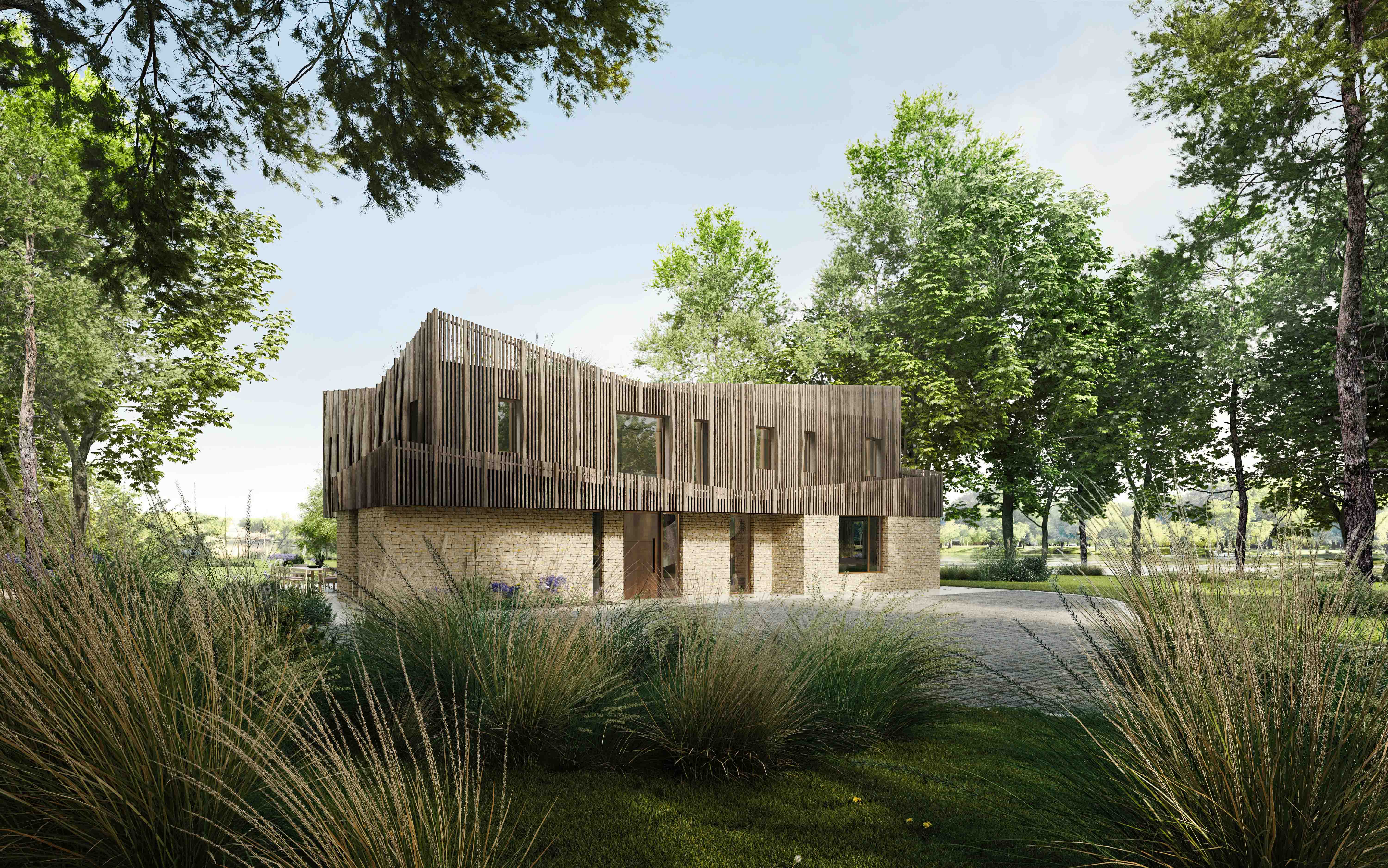
As part of the planning assessment, the local planning officer confirmed that although the new home introduces a contemporary architectural design, it would be an attractive and well-considered replacement for the existing building. While the house will be visible within the wider riverside setting, its carefully chosen position, set further back from the River Thames, significantly reduces its visual impact.
This sensitive approach to riverside design was a key factor in securing planning permission, demonstrating how careful siting and considered architecture can work successfully within protected landscapes.
After years of unsuccessful applications, S&P took a fundamentally different approach. In a complex and sensitive context, choosing the right team made all the difference. What sets S&P apart, particularly in the case of our home, is the extent to which they go above and beyond.
Net-Zero Operational Carbon
Architect
Spratley & Partners
Planning Consultant
Pete Hadley
Ecologist
Hankinson Duckett Associates
Flood Risk Consultant
Price & Myers
Arboricultural
Oakwood Tree Consultants
Energy And Sustainability
DHP
Transport
HVJ Transport